
Sunday, July 31, 2005
to all of you who have been checking in
hey friends, my site meter is telling me that many of you have been stopping by to see if anything is going on here. we are still in oaxaca, mexico and havn't had internet acces for a week. my brother got married over the weekend. jesse and sandra are a fantastic couple, i'm excited to see where they will go in the years to come. sylas is getting lots of love from both sets of grandparents and uncles and aunts. ruth only get's to hold him to nurse, and i get him when no one else can get him to stop crying. i'll try to post some pics tomorrow. much love to all.

Monday, July 25, 2005
so maybe i'm obsessed with redemption...
-but it's a healthy addiction.
here is a transcript from a lecture david bazan of pedro the lion gave a few years ago called The Role of Redemption in the Creative Process. david is a guy who get's a lot of slack from the chrisitan comunity for his willingness to engage with themes deemed too dark for comfort. as far as artists go, he has been a role model for me regarding the integration of faith and art.
here is a transcript from a lecture david bazan of pedro the lion gave a few years ago called The Role of Redemption in the Creative Process. david is a guy who get's a lot of slack from the chrisitan comunity for his willingness to engage with themes deemed too dark for comfort. as far as artists go, he has been a role model for me regarding the integration of faith and art.
Sunday, July 24, 2005
oaxaca, mexico

on tuesday the three
of us will be going
down south for my
bro's wedding.
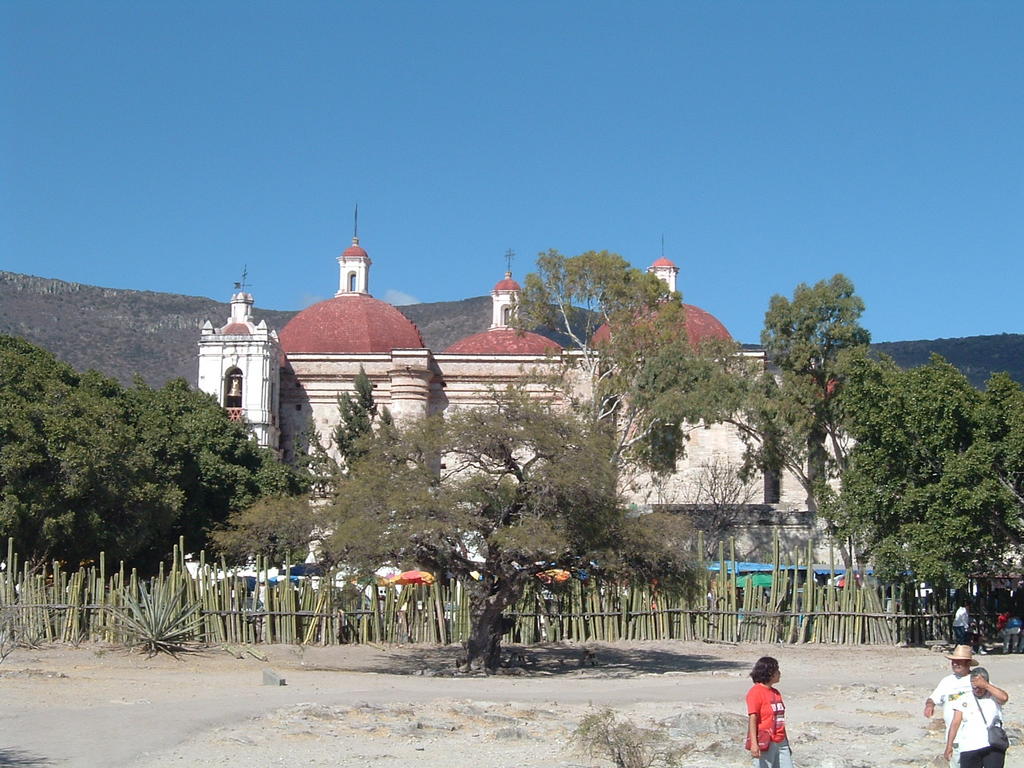
oaxaca is a beautiful
city, full of history,
religion and tradition.
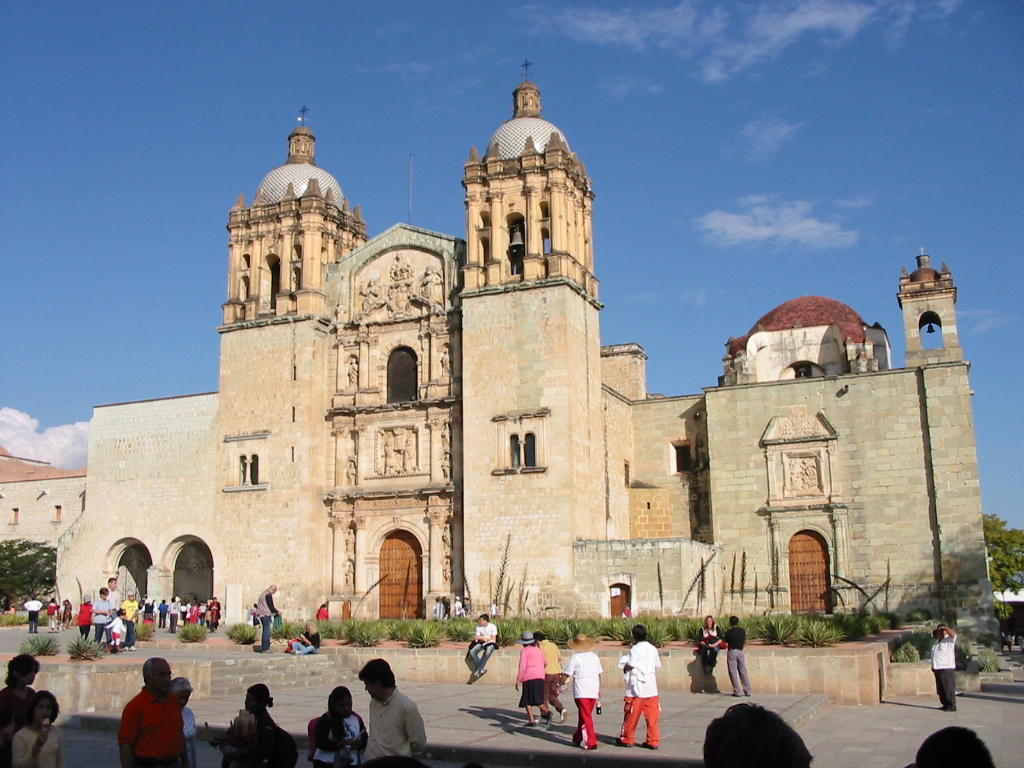
ruth and i are excited
to introduce sylas to
oaxaca, a significant
place in his family's
history.
Saturday, July 23, 2005
Friday, July 22, 2005
being dad
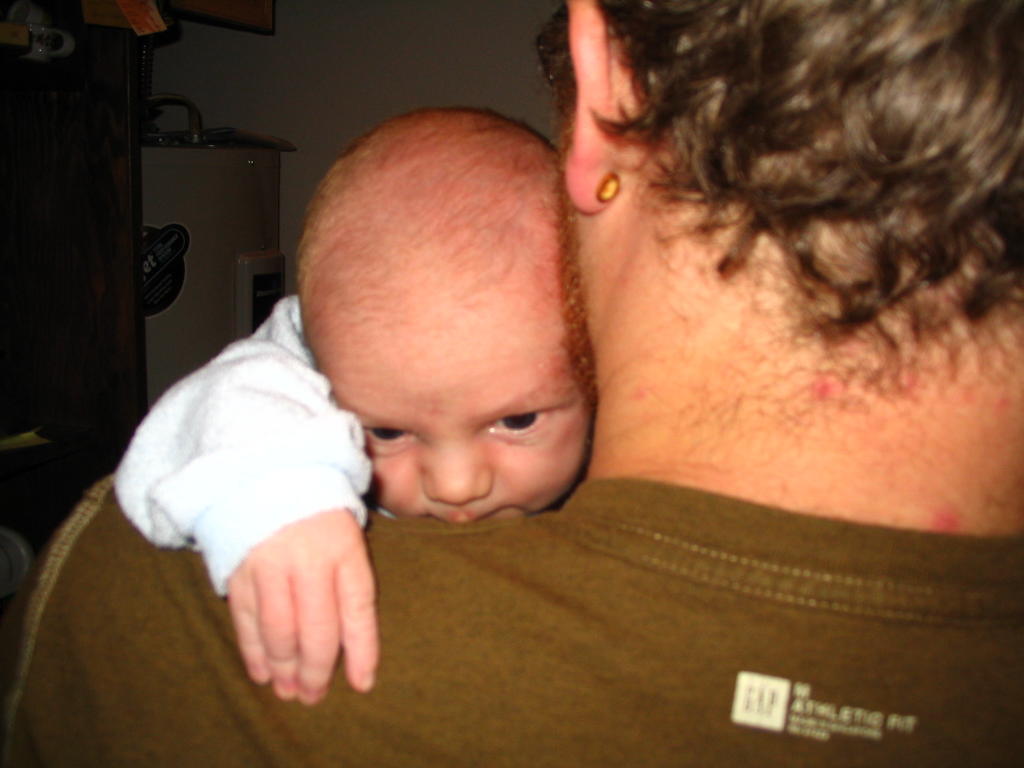
this week has been absoultely glorious in regards to
getting to know sylas, being with him. there is nothing
more overwhelming than to be held for the first time
in the bright eyed gaze of my son.
thirdness
I would like to consider the category of thirdness of which Charles Pierce wrote so much. In any moment we encounter each other, there is I (firstness), you (secondness), and what happens between us in the moment of the encounter (thirdness). It is also the realm of personal interpretation: there is the painting, the viewer, and what becomes when the viewer views the painting. Thirdness is the place that spawns relationship, it is the space of revolution, it is the cradle of chaos and confusion but also the domain of life and realization.
Additionally, postmodern cultural theory brings eventfulness to art. Modernity lead us to fall in love with the spectacular, postmodernity offers us the eventful. In art this is called “nature art” or “action art” (from the work of Andy Goldsworthy for example to the performance of The Blue Man Group). Art is not only something you look at, it is something you do, something you embody, something you perform. It is not necessarily to be framed and preserved. Rather it is the making visible of life: subjecting art to the drudgery of the clock, the horrors of the elements, the curse or blessing of la vida cotidiana- the every-day life. It is the eventfulness of art that requires you to “show up”- anyone can watch a spectacle, but an event needs faces. It was Levinas who emphasized the importance of moving from trace (meaning) to face (image) in hopes of discovering the vocative. The idea of voice in connection to face is a celebration of presence. My presence in the moment is contingent upon the interaction between me and the faces that are also present. I am defined by my relation to others. No longer can we “show up” without “showing up.” My participation in life hinges upon my connectivity to others as well as my willingness to bring myself to any interaction I face- whether it be the thirdness between myself and art, or myself and the environment, or myself and you- it must all be a thirdness of “I and Thou”- to borrow the language of Martin Buber. It is a commitment to hope for, seek after, and hunger towards moments where the heavens open up. Jesus shows up in the realm of thirdness- I hope to encounter him there with you.
-thoughts inspired by Carl Rashke's class "Religion and Culture" at Mars Hill Graduate School, Summer 2005.
Additionally, postmodern cultural theory brings eventfulness to art. Modernity lead us to fall in love with the spectacular, postmodernity offers us the eventful. In art this is called “nature art” or “action art” (from the work of Andy Goldsworthy for example to the performance of The Blue Man Group). Art is not only something you look at, it is something you do, something you embody, something you perform. It is not necessarily to be framed and preserved. Rather it is the making visible of life: subjecting art to the drudgery of the clock, the horrors of the elements, the curse or blessing of la vida cotidiana- the every-day life. It is the eventfulness of art that requires you to “show up”- anyone can watch a spectacle, but an event needs faces. It was Levinas who emphasized the importance of moving from trace (meaning) to face (image) in hopes of discovering the vocative. The idea of voice in connection to face is a celebration of presence. My presence in the moment is contingent upon the interaction between me and the faces that are also present. I am defined by my relation to others. No longer can we “show up” without “showing up.” My participation in life hinges upon my connectivity to others as well as my willingness to bring myself to any interaction I face- whether it be the thirdness between myself and art, or myself and the environment, or myself and you- it must all be a thirdness of “I and Thou”- to borrow the language of Martin Buber. It is a commitment to hope for, seek after, and hunger towards moments where the heavens open up. Jesus shows up in the realm of thirdness- I hope to encounter him there with you.
-thoughts inspired by Carl Rashke's class "Religion and Culture" at Mars Hill Graduate School, Summer 2005.
Tuesday, July 19, 2005
Monday, July 18, 2005
waiting for the woodsman

image copyright: nellis 2005
there's an interesting story with this piece,
but i'll tell it later.
Thursday, July 14, 2005
nature knows nothing fiercer
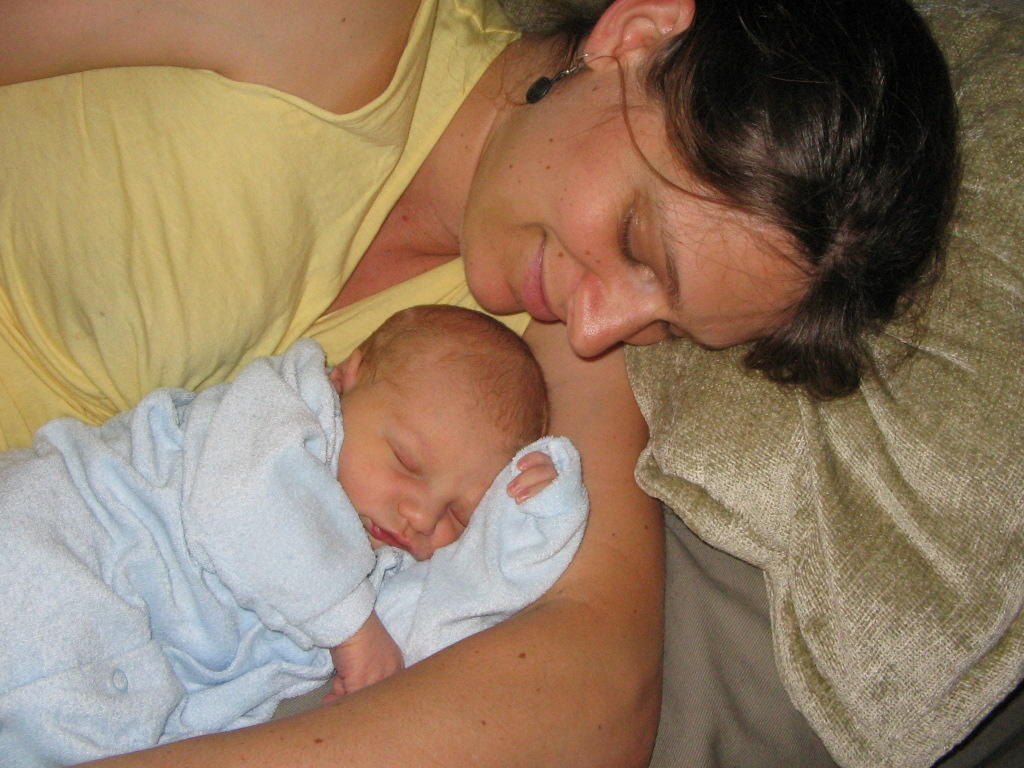
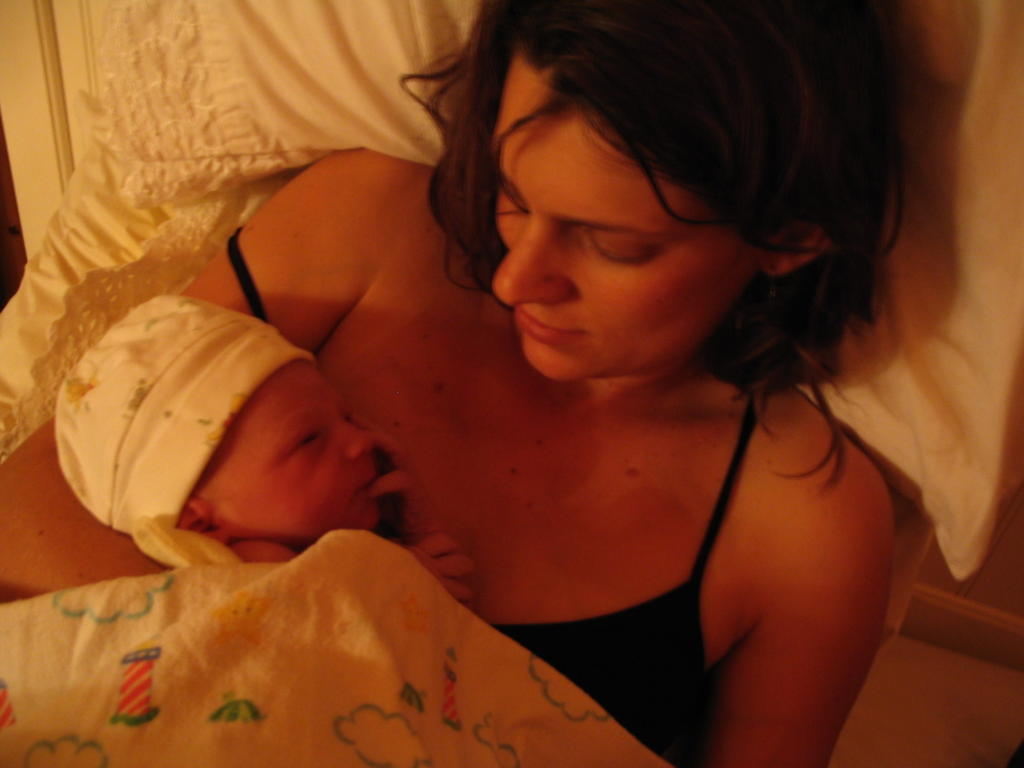
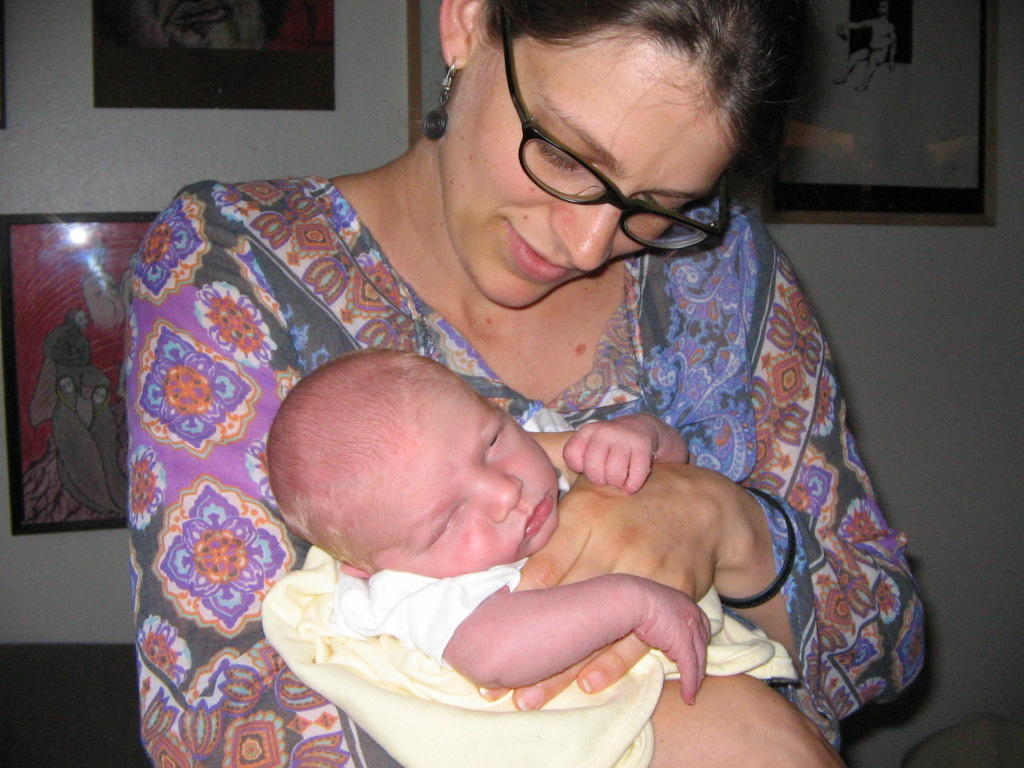
"I am no longer January, May or any other season, but am all spun to a fine thread round the cradle, wrapping in a cocoon made of my own blood the delicate limbs of my baby. Sleep, I say, and feel within me uprush some wilder, darker violence, so that I would fell down with one blow any intruder, any snatcher, who should break into this room and wake the sleeper."
taken from The Waves, by Virginia Woolf- posted upon request by my lovely wife, and fierce mother to my son.
just for fun
if you want to pigeonhole yourself by pinpointing your theological worldview,
take this quiz. i scored "emergent/postmodern." somehow this is all just wrong...
take this quiz. i scored "emergent/postmodern." somehow this is all just wrong...
Wednesday, July 13, 2005
sufjan tells it to the onion
my friend jaime pointed me to this interview with one of my favorite artists, sufjan stevens. if you have time, read the whole thing here. but this exchange in particular really caught my eye.
The Onion: Have you been surprised by how much attention has been paid to the fact that you're a Christian?
Sufjan Stevens: Um... Yeah, I think it's a little disconcerting. It can be a little frustrating. I think that certain terms that we use to describe a culture or religion are in some ways our way of isolating people, and I think sometimes these terms bring up all sorts of prejudices and misunderstandings and misconceptions. And I feel a little frustrated and guilty about being a part of that banter. And in some ways, I feel like this is something that is really important and sacred. Maybe it really shouldn't be a part of public discussion, because, you know, it really is about personal relationships.
and i could not agree more... thank you sufjan.
The Onion: Have you been surprised by how much attention has been paid to the fact that you're a Christian?
Sufjan Stevens: Um... Yeah, I think it's a little disconcerting. It can be a little frustrating. I think that certain terms that we use to describe a culture or religion are in some ways our way of isolating people, and I think sometimes these terms bring up all sorts of prejudices and misunderstandings and misconceptions. And I feel a little frustrated and guilty about being a part of that banter. And in some ways, I feel like this is something that is really important and sacred. Maybe it really shouldn't be a part of public discussion, because, you know, it really is about personal relationships.
and i could not agree more... thank you sufjan.
Tuesday, July 12, 2005
scent
my friend jon pointed me to this quote:
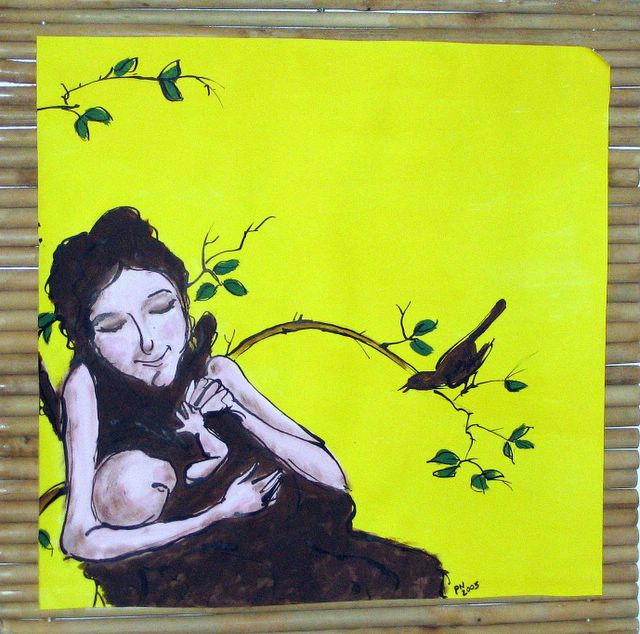
"Freedom has a scent like the top of a new born baby's head." - Bono, U2
and it resonates deeply with me as my new favorite thing to do is kiss
sylas on the forehead and breath deep the smell of newness, innocencia,
potential, spaciousness, possibility... freedom.
may God use this bow to send this little arrow high and far
fly little one, fly
"Freedom has a scent like the top of a new born baby's head." - Bono, U2
and it resonates deeply with me as my new favorite thing to do is kiss
sylas on the forehead and breath deep the smell of newness, innocencia,
potential, spaciousness, possibility... freedom.
may God use this bow to send this little arrow high and far
fly little one, fly
Monday, July 11, 2005
 i'd like to propose a toast! l'chaim!
Saturday, July 09, 2005

Thursday, July 07, 2005
three is a crowd
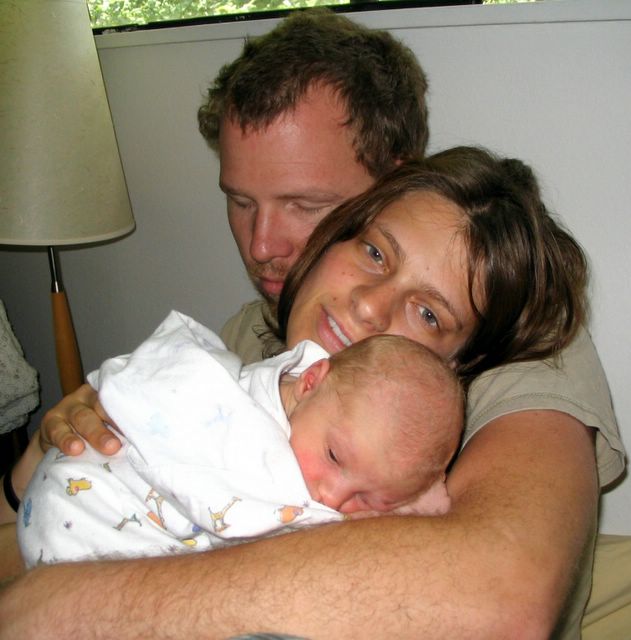
i cannot put words to the delight and joy that mark the last two days
... and the sheer exhaustion... but that is another story all together.
Wednesday, July 06, 2005
Sylas León Nellis

born at 9:45am on July 6th, 2005
7 lbs 14 oz and 21 inches long
after 30 hrs of active labor...
ruth, you are amazing!
Tuesday, July 05, 2005
immanent
for all of you who are checking this blog for baby news, we thank you.
she's been having contractions all day on and off, getting stronger and
closer together. mucus plug came this morning, still no water brakeage.
midwife said this is it. baby nellis should come sometime tonight or
tomorrow morn...
we covet your prayers and look fwd to celebrating the birth of our little one.
l'chaim- to life.
she's been having contractions all day on and off, getting stronger and
closer together. mucus plug came this morning, still no water brakeage.
midwife said this is it. baby nellis should come sometime tonight or
tomorrow morn...
we covet your prayers and look fwd to celebrating the birth of our little one.
l'chaim- to life.
Monday, July 04, 2005
rethinking
Dwight Friesen, a friend and professor of mine recently wrote an excellent, thought-provoking article for www.off-the-map.org called "Rethinking the Bridge Illustration." Read it here:
http://www.off-the-map.org/idealab/articles/idl0507-2-bridge.html
http://www.off-the-map.org/idealab/articles/idl0507-2-bridge.html
kavanah
this text is taken from:
Michael Frost & Alan Hirsch (2003) The Shaping of Things to Come, Peabody, MA: Hendrickson Pub. pg. 130
In Judaism, there is a distinct activity called kavanah. It is cultivated in order to maximize the inwardness of our actions. It means to pay attention, to direct the mind and heart in order to maximize the levels of intentionality in our actions. This applies to actions/deeds as it does to the Study of Scripture and to prayer but goes beyond these activities themselves to the notion of attentiveness to God Himself. It is not primarily an awareness of being commanded by God, but an awareness of the God who commands. The focus in kavanah shifts from the deed itself to its inner meaning, the goal being to find access to the sacred in the deed itself. It is finding the essence of the cask, to partake of its Inspiration, to be made equal to the task of fulfilling holy commands. Abraham Heschel says that "kavanah is direction to God and requires the involvement and redirection of the whole person. It is the act of bringing together the scattered forces of the self; it means the participation of heart and soul, not only of will and mind."
Martin Buber, one of the most influential interpreters of Judaism for the twentieth century, quotes a Hasidic anecdote and points out the interrelation between direction and redemption. "He who does a good deed with complete kavanah, that is, completes an act in such a way that his whole existence is gathered in it and directed in it towards God, he works on the redemption of the world, on its conquest for God.” Buber says elsewhere that-
"What matters is not what is being done, but the fact that every act is filled with sanctity - that is, with God-oriented intent - is a road to the heart of the world. There is nothing that is evil in itself; every passion can become a virtue, every inclination a 'vehicle of God.' It is not the matter of the act that is decisive, but its sanctification. Every act is hallowed if it is directed towards salvation. The soul of the doer alone determines the character of the deed. With this, the deed does in truth become the life center of religiosity."
This is a very useful and thoroughly biblical idea. Biblical ethics has always highlighted the element of motive and intentionality in the teachings of the New Testament, but seldom have we made this so accessible and meaningful to Christian life and mission, furthermore, we lack the theological framework to affirm so directly the impact of our everyday actions on the task of redemption. But as we will affirm in a later chapter, the reclamation of the deed as a means of grace is vital if we wish to sustain a vigorous missional engagement in our respective contexts.
Michael Frost & Alan Hirsch (2003) The Shaping of Things to Come, Peabody, MA: Hendrickson Pub. pg. 130
In Judaism, there is a distinct activity called kavanah. It is cultivated in order to maximize the inwardness of our actions. It means to pay attention, to direct the mind and heart in order to maximize the levels of intentionality in our actions. This applies to actions/deeds as it does to the Study of Scripture and to prayer but goes beyond these activities themselves to the notion of attentiveness to God Himself. It is not primarily an awareness of being commanded by God, but an awareness of the God who commands. The focus in kavanah shifts from the deed itself to its inner meaning, the goal being to find access to the sacred in the deed itself. It is finding the essence of the cask, to partake of its Inspiration, to be made equal to the task of fulfilling holy commands. Abraham Heschel says that "kavanah is direction to God and requires the involvement and redirection of the whole person. It is the act of bringing together the scattered forces of the self; it means the participation of heart and soul, not only of will and mind."
Martin Buber, one of the most influential interpreters of Judaism for the twentieth century, quotes a Hasidic anecdote and points out the interrelation between direction and redemption. "He who does a good deed with complete kavanah, that is, completes an act in such a way that his whole existence is gathered in it and directed in it towards God, he works on the redemption of the world, on its conquest for God.” Buber says elsewhere that-
"What matters is not what is being done, but the fact that every act is filled with sanctity - that is, with God-oriented intent - is a road to the heart of the world. There is nothing that is evil in itself; every passion can become a virtue, every inclination a 'vehicle of God.' It is not the matter of the act that is decisive, but its sanctification. Every act is hallowed if it is directed towards salvation. The soul of the doer alone determines the character of the deed. With this, the deed does in truth become the life center of religiosity."
This is a very useful and thoroughly biblical idea. Biblical ethics has always highlighted the element of motive and intentionality in the teachings of the New Testament, but seldom have we made this so accessible and meaningful to Christian life and mission, furthermore, we lack the theological framework to affirm so directly the impact of our everyday actions on the task of redemption. But as we will affirm in a later chapter, the reclamation of the deed as a means of grace is vital if we wish to sustain a vigorous missional engagement in our respective contexts.
Sunday, July 03, 2005

Saturday, July 02, 2005
the church without christ
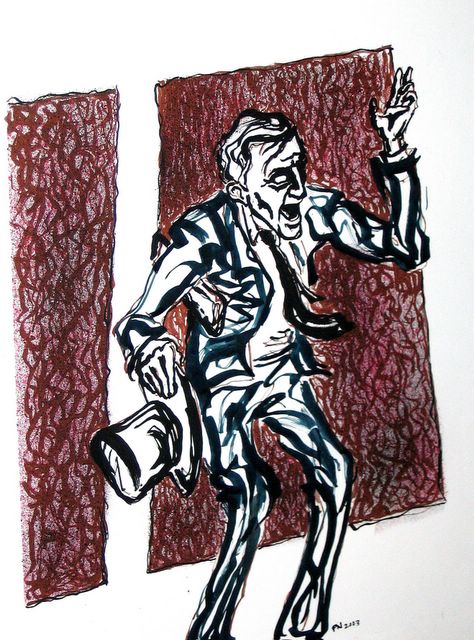
image copyright: nellis 2003
Flannery O'Connor wrote Wise Blood, a story about a man who preached the "church without Christ" and wound up going mad, burned his eyes out with lime. If there is no Christ, there is no grace. In contrast, the invitation is to be a "church without religion." Bonhoeffer opted for a “religionless Christianity” which was profoundly christocentric and therefore gave itself to encounter and solidarity with the other in a world of difference. Jesus Christ was fundamentally the “man for others”- in the salvation available to all in his incarnation, life, death and resurrection.
It can be argued that to embrace Christ is to drink the cup that he drank, and to drink it to the dregs- an earthly cup of solidarity with the other- a cup of suffering, unto death. So now, la via cruci (the way of the cross) is no longer an inward, exclusive religion, but it is the way unto difference- a vulnerable return to the other and a return to the world in its turmoil and struggle:
"The God of the cross is a God who reveals the relationships
between particular human beings, relationships that hold out
the promise of healing but are also susceptible to injury and
rupture. To become vulnerable for an Other is to welcome her
into one’s life, to pay attention to the detailed contours of his
face, and perhaps in the process to be changed."- Jensen, 2001
----------------------------------------------------------------------------------------------
in response to:
Jensen, David H. (2001) Religionless Christianity and vulnerable discipleship: the interfaith promise of Bonhoeffer’s theology. Journal of Ecumenical Studies, 38, 0022-0558. Retrieved March 14, 2005, from Academic Search Premier database.
Nouwen, Henri (1996). Can you Drink the Cup? Ave Maria Press: Notre Dame, IN.
Subscribe to:
Posts (Atom)